Many aspiring authors dream of publishing a children’s book. Far fewer build a sustainable writing life that lasts for years or even decades. In this interview, bestselling children’s author and StoryStorm founder Tara Lazar shares lessons on creativity, idea generation, publishing, perseverance, and why writing is more than a hobby—it’s a lifestyle. Whether you’re an aspiring author, experienced writer, or creative professional, Tara’s insights offer practical encouragement for building a long-term creative practice.
When you buy through my links, I may earn money from my affiliate partners. Learn more.
Editor’s Note (2026): This interview was originally conducted in 2021. Some publishing references, social media platforms, and future book releases reflect that time period. However, Tara’s insights on creativity, idea generation, writing habits, and sustainable creative work remain highly relevant today.
How Tara Lazar Became a Children’s Author
Tara, it’s a pleasure having you share your journey with us. Your literary life is filled with a multitude of Storystorm (formerly Picture Book Idea Month – PoBoIdMo) fans praising your work and numerous published books on store shelves. We’ve been able to explore your life in bits and pieces through interviews with Brian Gehrlein, Ryan G. Van Cleave, Brooke Van Sickle, and other amazing writing community supporters. But most of the information publicly available about you is stuff you do and stuff you’ve done. Important stuff, for sure. But knowing the stuff, without knowing you, is like going to art class without any glue. Who is Tara Lazar and how would you describe the arc of her story?
I’m just a kid-at-heart, raised in suburban New Jersey by divorced parents. I’ve always been about working hard yet having fun. I have always had a very strong sense of right vs. wrong and I strive to be as benevolent as possible. I’m a wife and mother of two daughters…and now one smelly cat named Phoebe.
You’ve shared previously that you were enamored by publishing at an early age…eight, I believe, which would have you in Elementary School. Would you describe your childhood environment as conducive to creative expression? Does anything stand out to you that reinforced your hope in becoming what you dreamed to be, despite such culmination occurring nearly 30 years later? And, as a mother of 2 daughters, what have you seen in terms of the opportunities a parent has to help or hinder a child’s passion?
When I was young, no one ever told me that I was in charge of my destiny. I thought the job you attained as an adult was by mere chance.
My elementary librarian told me that SHE WAS NICE TO MICE was written by 12-year-old Ally Sheedy, so that’s when I believed I could publish a book, too. Paula Danziger visited my school and that was also reaffirming. I had other creative pursuits, like acting and improv, but my parents pushed me to study business in college. They were pragmatic.
I tell my girls they can be anything they want to be and help educate them about their interests though neither wants to be a writer!
It’s incredible the influence a parent wields on the life of their child, intentional or unintentional. So much of what we expect or believe about ourselves comes about subconsciously from the experiences we lived through, most of which we could never remember or pinpoint. In our pursuit of being a good, nay great, parent, we often stumble and limit the hope and optimism of future generations by placing our own hesitations, fears, or limitations on them. The freedom to choose which fork we’ll take in the proverbial road is clearly seen in your own childhood. And yet, all the while as the flower of writing stories was blossoming in your soul, you studied business. What transpired in college and the early years post-college where you had to grapple between what you were learning, what you still loved, and how the two blended together?
Well, although they pushed me to study business, I majored in English with a creative writing focus. My first job was in publishing, albeit computer books. I thought that I’d transition to children’s books, but instead I went to a small high-tech market research firm. I was able to write marketing brochures and press releases, so I was still being creative. More importantly, I was able to be independent, with my own apartment, no roommates.
I knew writing picture books was something I’d still do, when I had more time–and more money tucked away in savings. I was realistic about the difficulty of earning a living from writing.
Can You Make a Living Writing Children’s Books?
The difficulty of earning a living from writing is well put. The Authors Guild reported an income drop of 30% for full-time authors between 2009 and 2015. Full-time authors with more than 25 years of experience saw an even worse drop at 67%, leaving them with an average annual income of $9,500. Hardly enough to be considered a dream job in terms of financial reward. While these are averages and genre-specific, the old adage returns – Write for the love of writing, not for money. And yet, droves of writers write and submit and query and publish. The number of authors is ever growing and the number of books being created is astronomical! As an accomplished, published author, how do you parse the financial data? Is it as simple as some are going to make it financially and most won’t or is it more complicated than that? Is there something foundationally human in our desire to communicate with one another through words and that money is only a cherry on top for a few, select authors?
Writing is an extremely competitive field–haven’t we all heard the saying “everyone has a book inside them”? How many of us tell acquaintances what we do and get a response like, “I wrote a children’s book one afternoon, too!”
There are a plethora of reasons why it pays the bills for only a few while the rest of us sit mid-list…but if you are a creative person, if you must write, you can make it work. For #kidlit authors, school visits, teaching and other related pursuits can supplement advances and royalties. You do what you can in an effort to keep writing, to keep producing better work, to create a book that a child needs, loves, and touches their life. What’s extraordinary about our work is that we can never know how far it reaches. But I know this–it does a lot of good. And we need more good in the world.
Creativity, StoryStorm, and Idea Generation
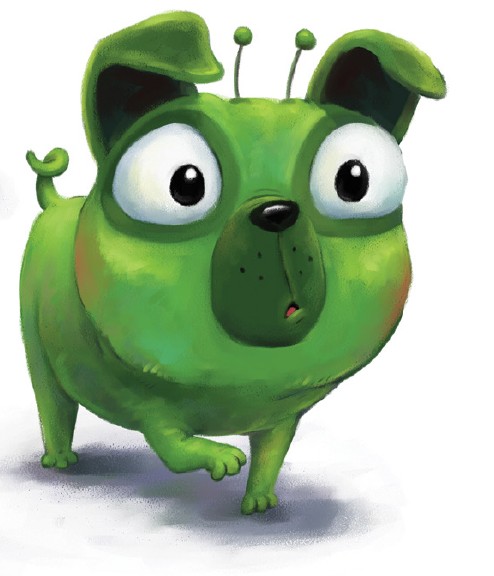
Speaking of doing more good in the world by writing children’s books, there are 9 published books with your name on them and three more on the way. With BLOOP! (illustrated by Mike Boldt) and ABSURD WORDS: A KIDS’ FUN AND HILARIOUS VOCABULARY BUILDER FOR FUTURE WORD NERDS slated for publishing in 2021, PRIVATE I SERIES #3 releasing in 2022, and championing #Storystorm, how do you keep from buckling under all the stress? How have your strategies to promote work and nurture other book creators changed during the pandemic? Are you planning on slowing down to catch a breath or, like your Storystorm participants, are your ideas and projects coming as quickly as ever?
I have to mention Multiple Sclerosis here…the disease has affected my mobility over the last 10 years, so I spend more time sitting in one spot than most other people. That allows me plenty of time to get it all done. Plus, I love what I do, so you can usually find me doing some kind of work every day.
I have 8 new manuscripts completed and several are circulating among editors, while some are still waiting for their turn. I’m thinking about writing in other genres, like young graphic novels or early readers. I have dabbled in Middle Grade (MG), but I don’t know if 30,000 words is my thing. I may try stringing together short stories–short has always been my strength and creative love.
Ideas pop up regularly. While I don’t officially participate in Storystorm, I’ve gotten into the habit of idea generation, so every week produces a list of new ideas. There is always something to keep me occupied!
And that’s where I come to Multiple Sclerosis again. I find being busy makes the pain and discomfort slide into the background–I don’t give myself time to dwell on it. So kidlit work is a blessing to me.
How Writers Discover Their Genre
Wow, Tara! You’ve got a lot on your plate. I love your positive attitude towards living life to the maximum despite Multiple Sclerosis. I can’t imagine how much difficulty that adds to typically routine activities and admire your perseverance! You mentioned not knowing if Middle Grade writing is your thing. Many authors struggle with identifying by only one genre or needing to focus on a single genre until some magical moment in their career where they feel they could pivot or expand. You say short stories have always been your strength and creative love. What would you say to authors who love creative writing but aren’t sure what genre they should focus on? Does it boil down to which is the most fun to write or should all authors try their hand in other genres and keep pushing just in case they have a hidden strength elsewhere? When in your career did you come to know short stories were your jam?
I learned how to ID your genre from Denise Fleming. What age are you inside? I’m in second grade, 7-8 years old. So I write for that age group. Denise says she’s 5!
You get to know your writing “jam” from writing. Write with no expectations of publication. Write what you enjoy. After a lot of that, a pattern will emerge. But, you should also stretch yourself–that’s how you grow as a writer. I don’t think I’ve stretched myself enough, and that’s totally on me.
That’s a really great point about intentionally stretching ourselves in writing to grow not only within a genre but dabble and experience other genres that may also be knocking on the door one our hearts. You mentioned broadening your own writing scope with young graphic novels or early readers. Many authors wonder if they’ll be able to sell work across genres and I’m reminded of what you just said – write with no expectations of publication. There’s no question that the fear of a book or manuscript not selling well can affect our motivations and decisions to start or finish in the first place. As a published author, how do you process the fear or determination to step outside your own author zone? Is it freeing? Terrifying? What do you recommend as-yet-unpublished authors do with their desires to be in multiple genres?
I don’t know if I’m the best person to recommend anything about multiple genres, since I have several picture books and only one outside-the-box MG non-fiction (ABSURD WORDS, releasing late this year). I have always been the one to suggest writing from a place of joy–write what makes you happy, what compels you to write on. I think that enthusiasm flows onto the page. And if you’re unsure about the genre or age group, you can always learn.
There are workshops and boot camps and books to help you find the right path for your story.
Building Writing Skills and Industry Knowledge
Workshops, boot camps, and books are in ample supply for authors and illustrators looking to develop their craft. Have there been any training and development groups, classes, or books that made a significant mark on you in your publishing journey? What was it about them that stand out? Are there any current offerings you highly recommend people consider to develop writing skills, publishing industry knowledge, relationship building, sales, communication or presentation skills, etc.?
I love Highlights Foundation. Their offerings are top-notch for the unpublished and published. Once this pandemic is over, it’s the first place I’m racing to. Publishing industry knowledge, relationship building, presentation skills–these are all things you can develop on your own in the spaces between writing. I read publishing news, follow publishing people on social media, and dip my big toe in the “kidlit waters” every day. It’s not just a job, it’s a lifestyle!
As a kid, I was very active in theatre, so I developed an affinity for public speaking then. I realize that is a difficult thing to do if you’re not used to it. So get used to it! Why not practice with some Facebook Live or Instagram broadcasts? We’re all at home now, so it’s a good time to brush up those skills for when we start conferencing again!
Advice for New Children’s Writers
COVID-19 has driven many new faces onto social media expressing they have just begun their own publishing journey. As a veteran of the industry, if you’d allow me to label you as such, are there any words of advice or encouragement you wish were shared with you in your earliest writing days? Or, were there any that were shared that helped you set a smart trajectory? On the flip side, what’s some of the worst advice you’ve heard that should NOT be taken to heart?
A lot of the things I wish I would have known I have put on my blog. Number one is being prolific and not to pin your hopes on only one manuscript. Move past that first thing you wrote. By writing more stories, you will better at it! Fixing one story will only get you so far. And, the writing could be perfection but the subject might not click with an editor. So create a lot of ideas and multiple manuscripts!
Why StoryStorm Matters
Writers must write. It’s incredibly simple yet profoundly difficult. While dreaming, imagining, wondering, and talking about ideas, stories, and books certainly has its place in the publishing process, it’s unfinished and unproductive if it never yields a written product. Writing is the one publishing trend authors must adhere to, because written work is what gets published. Not great ideas. Through your free Storystorm annual event, a plethora of writers have had their ideas jolted into reality. Countless people have become eternally grateful to how you’ve poured yourself out for other people while allowing your publishing journey to be transparent and authentic. What keeps you so outward focused? Why do you plan for Storystorm to be free forever? What can we expect to see from you over the next 3-5 years and how can we best follow your passions, support your work, and connect with you down the road?
Storystorm is something I started on a whim and never realized how beloved the challenge would become! Then it dawned on me after a few years into it, that having a treasure trove of ideas was the key to my own success.
If I haven’t had multiple manuscripts ready for submission, I might have been a one-hit wonder! So, I keep running Storystorm to help encourage other writers to do the same. Personally, I want more children’s books out in the world where they belong, so each child has a chance of finding their favorite book, their best friend when they really need it.
In my mind, Storystorm will always be free because that keeps it from becoming more important than my own writing. I didn’t aim to be a Storystorm entrepreneur. I just want to be an author!
Plus, it’s a great opportunity to fundraise for charity and this year I’m donating sales from the Storystorm store to Blessings in a Backpack, to help with childhood hunger.
Over the next few years, expect more books from me. That’s my focus. I will remain open to their genre and format!
Thank you so much for reading. Be sure to connect with Tara Lazar on X @TaraLazar. Happy writing!
Top Writing and Publishing Lessons From Tara Lazar
Writing Is a Lifestyle
Successful writers rarely treat writing as something they do only when inspiration appears. They build their lives around creativity, learning, and continuous improvement.
Generate More Ideas Than You Need
One manuscript is rarely enough. The writers who last continue generating ideas and creating new work.
Write From Joy
The strongest creative work often comes from curiosity and enthusiasm rather than chasing trends or publication.
Community Accelerates Growth
Conferences, critique groups, workshops, and writing communities help writers improve faster and stay encouraged through setbacks.
Consistency Beats Talent Alone
Publishing success is often the result of sustained effort over many years rather than a single breakthrough project.
Creative Work Can Become Purpose
Writing is not simply about publication. It is about creating stories that connect with readers and make a meaningful impact.
Final Thoughts
One of the themes that surfaced repeatedly throughout this conversation is that writing is rarely a destination. It is a practice.
Many aspiring authors view publication as the finish line. Tara’s journey suggests something different. The authors who remain engaged for years are often the ones who learn to enjoy the process itself—generating ideas, improving their craft, connecting with other writers, and continuing to create even when success feels uncertain.
I was particularly struck by Tara’s emphasis on idea generation. StoryStorm is not simply a challenge about collecting story concepts. It reflects a deeper philosophy that creative growth comes from abundance. Writers who continually create new ideas, new stories, and new opportunities place themselves in a position to succeed over the long term.
Her perspective on writing from a place of joy is equally refreshing. In an industry filled with trends, rejection, comparison, and uncertainty, it is easy to become overly focused on outcomes. Yet some of the most meaningful advice in this interview is also the simplest: write what excites you. Write what keeps pulling you back to the page.
Perhaps most importantly, Tara demonstrates that a creative life can be built gradually. It does not require perfection. It does not require immediate success. It requires curiosity, persistence, learning, and a willingness to keep showing up.
Whether you are pursuing children’s publishing, writing nonfiction, creating online content, or simply exploring your creativity for the first time, the principles remain the same. Generate ideas. Develop your craft. Build relationships. Stay curious. Keep writing.
Because the writers who make the greatest impact are often not the most talented—they are the ones who continue creating long after others have stopped.

Phyllis Harris
February 24, 2021I really enjoyed this interview! Thanks Rhys and Tara for sharing!
Rhys Keller
February 24, 2021Thank you so much, Phyllis! Glad you enjoyed it and that you stopped by to share!
Shea Harrington
February 17, 2021Thank you for this wonderful interview, Rhys.
I have been a Tara fan for years as her kindness and encouragement have been so helpful to me (and many others!). I can’t wait to hold BLOOP! in my hands. Wait… that didn’t sound right:)
Rhys Keller
February 18, 2021Thank you for reading and sharing, Shea! I agree, Tara is such a giver and encourager in the writing community! BLOOP! looks so fun!