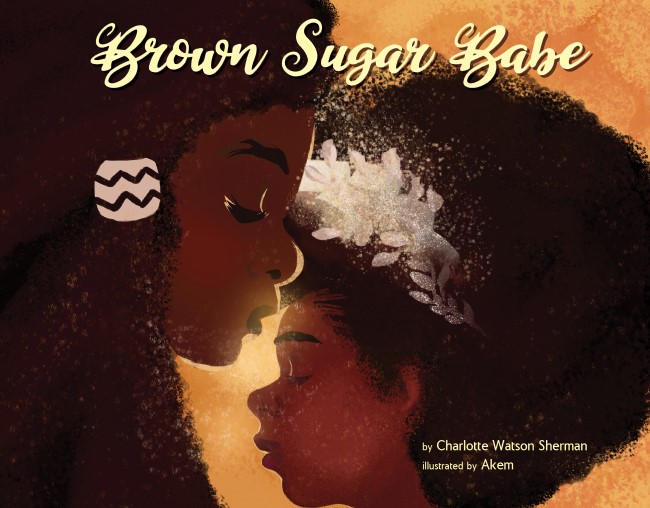
Some books entertain. Some educate. A rare few are created because their authors believe the book needs to exist. Brown Sugar Babe is one of those books. In this interview, author Charlotte Watson Sherman and editor Jes Negron discuss the purpose behind the picture book, the importance of representation in children’s literature, the realities of the publishing process, and the role stories can play in helping young readers see themselves with confidence, dignity, and hope. Their conversation offers valuable insights not only into publishing children’s books, but also into creating work that serves a meaningful purpose beyond the page.
When you buy through my links, I may earn money from my affiliate partners. Learn more.
Editor’s Note: This interview was originally conducted in 2019 ahead of the publication of Brown Sugar Babe. While some publication details, release dates, and industry information may have changed since the interview was first published, the creative insights shared by author Charlotte Watson Sherman and editor Jes Negron remain valuable for writers, readers, educators, and anyone interested in the picture book publishing process.
Author Charlotte Watson Sherman
Charlotte Watson Sherman was born and raised in the Pacific Northwest. She is a mother, grandmother, sister, friend, giggler, and lover of words who sometimes works in libraries. Charlotte loves daydreaming and strolling the waterfront searching for dolphins, or seals, or whales in the marine sanctuary not far from her home in California. Charlotte is a lover of words and now loves even more words with her debut picture book, BROWN SUGAR BABE (Kane Press, January 2020). She is also a member of the Perfect2020PBs crew of talented authors and illustrators who have picture books releasing in 2020.
BROWN SUGAR BABE Book Creators:
- Publisher: Boyds Mills & Kane Press
- Release Date: January 2020
- Author: Charlotte Watson Sherman
- Illustrator: Akem
- Illustrator Agent: Michelle Witte with Mansion Street Literary Management
- Acquisition Editor: Jes Negron
The Purpose Behind Brown Sugar Babe
Charlotte, it takes grit to make a book. Even beyond grit, it takes faith, hope, and love. A story is a uniquely personal creation that, when shared with others, becomes an extension of ourselves. Sharing stories and ideas makes us vulnerable and at the mercy of others’ judgement. How did your book come to exist? How did you go about overcoming the fear of rejection that ultimately led to acquisition? What does this book getting published mean to you?
Brown Sugar Babe came to exist as a result of the twitter pitching event, #DVpit. Its backstory has two components.
1) I overheard a toddler with beautiful brown skin declare she was pink and it called to mind a doll test back in the day where brown children preferred white dolls and those findings led to the Brown vs. Board of Education desegregation of public schools ruling.
2) I kept reading accounts of Black children committing suicide on social media and in order to process my grief and despair, I decided to use the tools at my disposal—writing skills—to create something beautiful to blast the souls of as many Black children as the book could reach with love and encourage them to want to choose life, even in terrible circumstances, such as the political environment we now find ourselves in.
I published my first poem at 19, so I’ve dealt with a lot of rejection over the years. It doesn’t get easier, but belief in the projects I work on provides armor that keeps me submitting. Jes Negron believing in this book means everything to me as a writer who hadn’t published a book in over 20 years. Her acceptance signaled me to keep writing and never give up.
Nothing brings people together like a great book. Not only for those of us reading it, but you and the incredible team necessary to create and publish it. What was the publishing process like for you? Where there any ups or downs? Any surprises? Is there anyone special you’d like to mention that helped make this book a reality?
I’m still in shock this is really happening. The initial surprise was Jes liking my pitch, then wanting to speak by telephone about my vision to see if it aligned with hers. I love revision because it gives us writers another chance to make our writing better and Jes had at least one suggestion that most likely saved me from myself.
Then she chose Akem to illustrate the book and the four of us— Jes, Akem, her agent, and myself — had a conference call where we could ask each other questions. I cried when I saw some of Akem’s early illustrations. I’d like to mention my friend, the visual artist Jill Littlewood, who invited me to stay at her home for a year-long writing residency two months after my mother died. This book wouldn’t have happened without Jill.
Finding Your Voice as a Writer
Many book creators began their creative journey in childhood, though some find it for the first time later in life. How far back can you see life experiences taking you along the author/illustrator path? Was there an “Aha!” moment that you knew making books was the life for you?
Rainier View Elementary School. Pippi Longstocking. And her hijinks. I was hooked from that point forward. And decades later, I still haven’t stopped.
Making picture books is a skill and an art. What was/is your process for taking your ideas and turning them into a beautiful story? How do you know which thoughts are worth spending time on and which should be left in your notebook of ideas?
My process involves studying the craft of writing picture books. I am a member of Storyteller Academy so I read a lot of picture books suggested by SA instructors. I enjoy researching topics and taking a lot of notes, “feeling” for the structure I want a piece of writing to take, then shaping the chaos into a coherent form, and re-writing until I pare the piece down (now I try to shoot for 500 words or less). Then I use text-to-speech on my computer and listen to how it sounds and rewrite even more.
The thoughts worth spending time on are the ones that won’t leave me alone; that doesn’t mean they’ll end up being published, but I’ll have the pleasure and challenge of tinkering with them until I abandon them, but even then I may circle back to them at some point in the future when I have gained more skill and can tackle them in a new way.
Why This Story Needed to Be Published
Jes, there’s something uniquely special about this story. Many manuscripts are submitted yet only a few pass through the trials by fire. What is it about this story that made you have to have it? What impact do you hope it has on readers everywhere?
When I read this manuscript, I knew immediately I would present it to my team to be acquired. Charlotte’s words have a rhythm that stays with you, and her imagery is full of heart. The subject matter was just the cherry on top – this book is so necessary in a country where brown-skinned children find reason to doubt themselves every day. And thanks to the illustrator, Akem, the words of BROWN SUGAR BABE were brought to life with rich, dreamy artwork. I hope kids will be inspired by the positive message on these pages and I hope brown sugar babes everywhere will be reminded of their own beauty.
Though unique in its own right, a book has to fit on store shelves somewhere. What comparable books might this story sit beside and in what ways is it similar to them?
BROWN SUGAR BABE would sit comfortably beside books like SULWE (by Lupita Nyong’o and illustrated by Vashti Harrison) and I AM ENOUGH (by Grace Byers and illustrated by Keturah A. Bobo). They all contain messages of self-love and acceptance and feature beautiful brown children.
The Editorial Process Behind a Picture Book
The publishing process from rough draft to finished product is chalk full of revisions, changes, and new directions. What changes were made to this story that helped it along the way or what aspects were left unchanged because they were simply perfect the way they were?
Charlotte is a fantastic writer, and BROWN SUGAR BABE didn’t need much help. So many lines were beautiful as is. My job as editor for this book was just to make sure every line was elevated to that level of beauty. Charlotte had already done such a wonderful job of exploring all facets of brown (not just food—a trap that many writers may fall into) that I simply helped in places where the imagery needed to be a little stronger, or the rhythm needed some polish.
Key Lessons for Writers and Creators
Several powerful themes emerge throughout this conversation.
First, meaningful creative work often begins with deeply personal experiences. Brown Sugar Babe was not created to follow a trend or fill a market opportunity. It was written in response to real pain, real observations, and a desire to contribute something positive to the world.
Second, persistence matters. Charlotte’s publishing journey included years of rejection, revision, and continued effort. Success rarely belongs to those who never encounter rejection. More often, it belongs to those who continue creating despite it.
Third, collaboration strengthens creative work. Editors, illustrators, critique partners, agents, and publishing professionals all contribute perspectives that help transform a manuscript into a finished book.
Finally, stories have the power to shape identity. The books children encounter can influence how they see themselves, how they understand others, and what possibilities they believe exist for their future.
The most memorable books often do more than tell a story. They remind readers that they matter.
Final Thoughts
One of the most encouraging aspects of this conversation is the reminder that books begin with people.
They begin with observations, experiences, questions, hopes, frustrations, and dreams.
Behind every published book is a creator who cared enough to turn an idea into something that could help, encourage, entertain, or inspire someone else.
Whether you’re pursuing publication yourself or simply appreciate the stories that shape young readers, Brown Sugar Babe serves as a reminder that thoughtful storytelling can have a lasting impact far beyond the final page.
Great books don’t just occupy space on a shelf.
They help people see themselves—and each other—more clearly.

Amy
November 13, 2019Congratulations on Brown Sugar Babe Charlotte! Thank you for sharing your journey and reminding us that we have the power to transform grief into hope and love! I can’t wait to read your story.
Rhys Keller
November 14, 2019Thanks for reading and for the note, Amy! I agree, BROWN SUGAR BABE sounds like a must-have picture book given the ever growing despair in our communities.
Charlotte Sherman
November 15, 2019Thank you so much, Amy. We do have that power.
The In-between Moms
November 13, 2019Sounds like a great book and a much needed message! I look forward to reading it!
Rhys Keller
November 13, 2019Thank you for reading and sharing – I couldn’t agree more!
Charlotte Sherman
November 15, 2019Thank you, In-between Moms!!!