What makes a picture book stand out in a crowded marketplace? Why do some manuscripts capture the attention of agents, editors, and illustrators while others never gain traction? To answer those questions, I spoke with the team behind TASTE YOUR WORDS by Bonnie Clark and Todd Bright. From the author and illustrator to the literary agent and acquisitions editor, each shares what made this project special and what aspiring picture book creators can learn from the publishing process.
When you buy through my links, I may earn money from my affiliate partners. Learn more.
The Picture Book Team Behind Taste Your Words
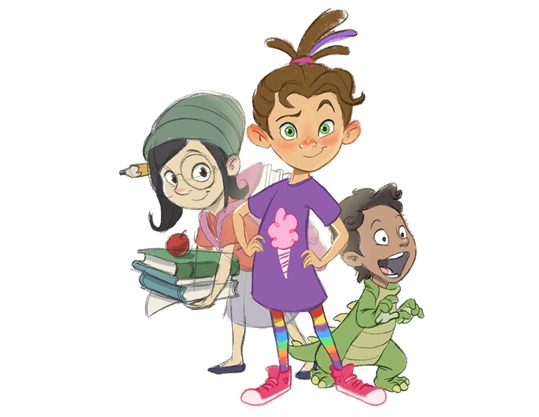
Bonnie Clark’s debut picture book, TASTE YOUR WORDS, teaches children and adults that choosing kind words makes life sweet. When main character Amera says something unkind, it tastes gross. When she says something nice, it tastes delightful.
If you haven’t read Bonnie’s first interview, please do, and you’ll get all the back story behind her and her love of writing.
- Author – Bonnie Clark @BonClark
- Illustrator – Todd Bright @BrightAnimation
- Agent – Adria Goetz @AdriaMGoetz with with KT Literary (used to be with Martin Literary Management)
- Acquisitions Editor – Peggy Schaefer with Worthy Kids/Ideals @WorthyPub
“Kind words are like honey, sweet to the soul and healthy for the body.”
Proverbs 16:24
Author Perspective: How Bonnie Clark Created Taste Your Words
How did this idea come to be?
The idea for the picture book came from something we say often in our home: “Taste your Words before you let them out of your mouth!” It was a fun concept that my kids caught on to when they were very young so I thought it would be neat to share it with other kids.
What was it like sharing it with other people?
I first shared my idea with my writers critique group at a SCBWI conference and they loved it! Their excitement really motivated to get the idea out of my brain an into story form. They have continued to be a huge source of support and encouragement to me throughout this process.
How did you bring the idea/manuscript to the attention of the agent or editor?
I participated in a Twitter Pitch Party and my pitch, paired with the fabulous illustrations by Todd Bright (my step-brother!) caught the attention of the highly sought after agent Adria Goetz who had been on my radar for some time. Adria orchestrated a five-house auction before TASTE YOUR WORDS landed with Worthy Kids.
What’s been the most challenging aspect of the publishing process and how did you get through it?
The biggest challenge has been the twists and turns that this project as taken along the way! Todd and I were with a different publisher initially, but eventually found Adria. In the end I am extremely grateful for the process because it makes TASTE YOUR WORDS that much sweeter. I am super proud of the illustrations- I can’t imagine them any other way than by the amazing Todd Bright. I am impressed more and more with the poise and professionalism of Adria, and I am grateful for the opportunity to work with Peggy and her team at Worthy Kids.
Illustrator Perspective: Bringing Taste Your Words to Life
How did you receive this project to illustrate?
The author, who happens to be my step-sister, made the request to the Publisher, they agreed and contacted me.
What was your reaction when you received or were offered this project?
I was very excited to work with Bonnie, which has meaning all its own. However, after reading Taste Your Words, I was excited this story would be my first children’s book outside of any franchise. It was the right story and an opportunity to color outside the lines.
What challenges did you face on this project?
Actually, quite a few! If Taste Your Words makes it to NYT Top 10, you’ll find out in the ‘Tell All’ behind the scenes movie. The best things I’ve had opportunity to work on or be part of didn’t come without challenge and sacrifice.
What perspective did you have while creating the art for this project or what were you trying to accomplish throughout the story?
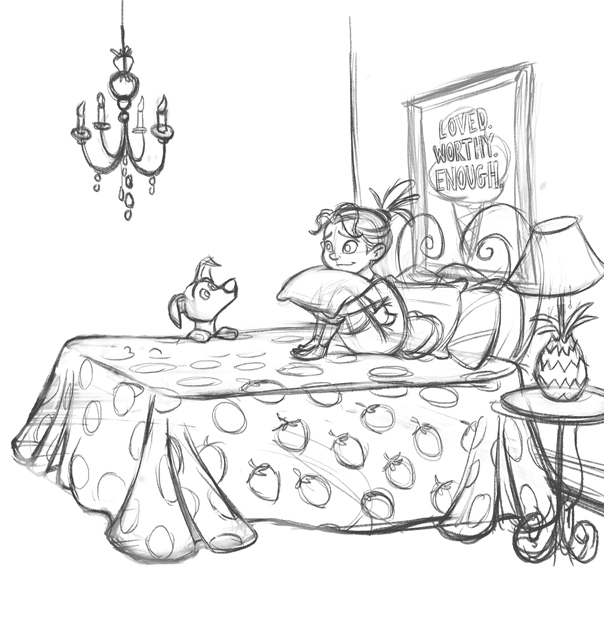
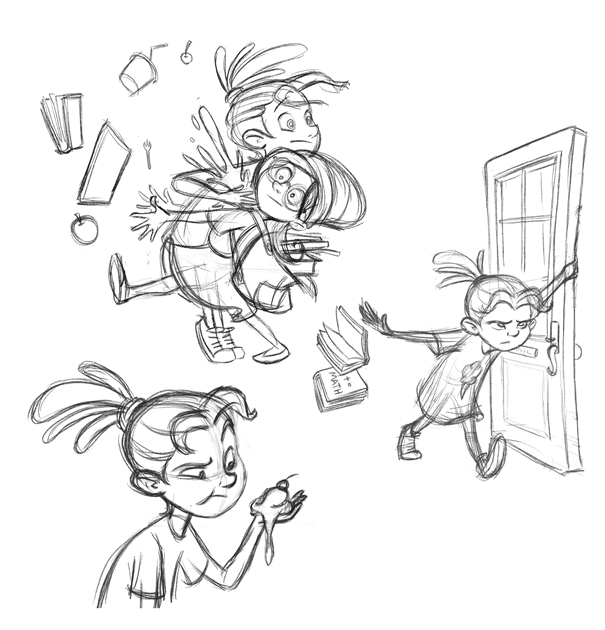
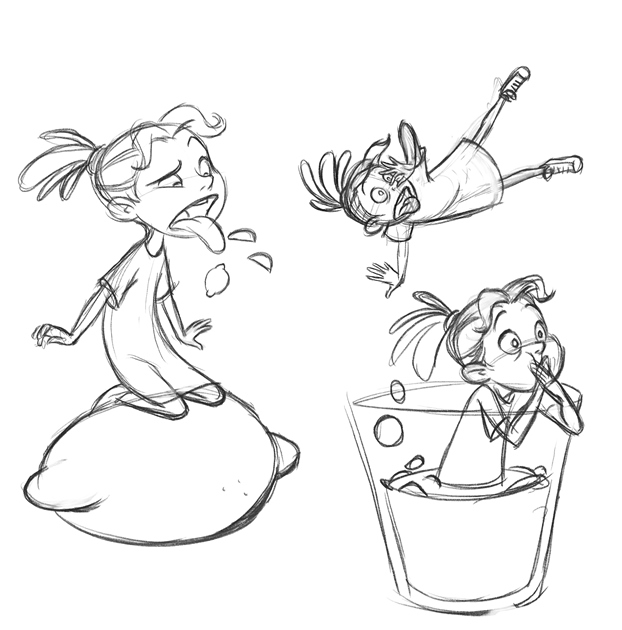
Working in sequential art as a career, I rarely get to touch all aspects of the visuals, only individual parts: Story board, character design, animation scenes, etc. For TYW, I was excited to use all the components together to further the story. For example, using color progression in the visual story to accent the ups and downs Amera goes through, and to assign certain moods to key environments she is staged in.
Did anything about this project particularly excite you to try and illustrate?
I was excited to play with the notion of ‘Taste’. How do you visually show that in an interesting way? I looked for the answers in the Amera character and tried to get in her head: she’s a pretty imaginative and colorful personality, she thinks big and bold… so why not a watermelon slide I reckon?
Are there any specific elements you tried to illuminate in your story within the story?
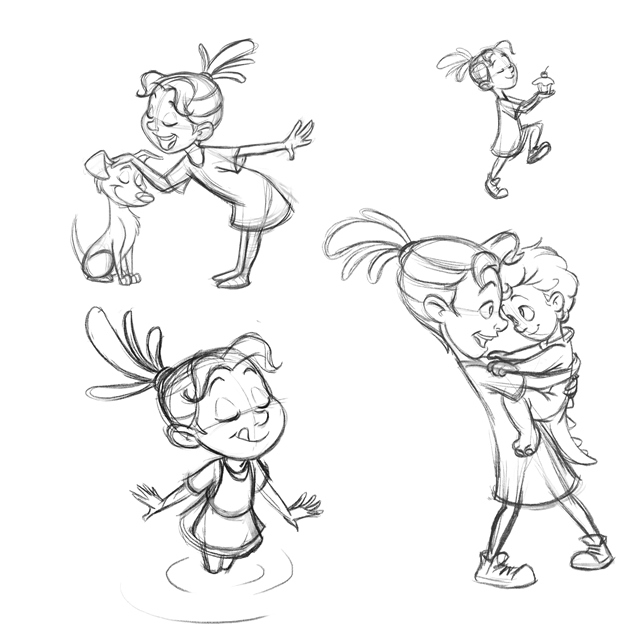
Bonnie was gracious to name Amera’s brother after my son, Remy. It was a lot of fun to have him in there to illuminate how we are all chosen into family, whether biological, blended, and/or spiritually. That little boy has taught me a lot. Especially about dinosaurs.
I also snuck in our dog, Alex, and was able to introduce the dog character earlier in the book than was originally written. She helped lighten the mood in a few places and added heart in the right moments.
Agent Perspective: Why Adria Goetz Said Yes
Why did this book idea manuscript stand out to you?
To me, Taste Your Words had the It factor. The concept is an instant hook: when the main character Amera says mean things, her words taste icky and bitter like sour milk and pickle juice. When she says kind things, her words taste sweet and delicious, like birthday cake and chocolate drizzle.
I couldn’t imagine anyone reading this story and not falling in love with Bonnie’s hook-y concept and Todd Bright’s incredible and vibrant illustrations. Taste Your Words is delightful and fun, and most importantly kid-friendly. It also has a wonderful message that feels as relevant as ever, which is: we need to be mindful of the words we speak. Kind words taste so much sweeter than unkind words, and this idea rings so true to me.
Editor Perspective: Why Worthy Kids Acquired the Book
What’s so special about this book that you had to have it?
In addition to being an engaging story, Taste Your Words carries an important and timely message. It encourages children to think before they speak, which is something adults need to remember as well. I fell in love with the book’s message and thought it would be a great fit for our publishing program.
What does this book brings to the market?
Taste Your Words provides parents with a valuable resource as they teach their children that words have power and impact—both negative and positive. The book also encourages empathy and kindness in young readers.
What was your perspective when you first read the manuscript?
I was impressed with the way Bonnie and Todd were able to take an abstract concept and transform it into something concrete that children can easily understand.
What stood out to you about the author and agent soliciting the manuscript?
I had worked with the agent on a previous book and found her to have a good eye for talented writers. And Bonnie didn’t disappoint. She has a good grasp on how to write for children and brings fantastic passion and enthusiasm to the project.
What made you select the illustrator for the project?
Lucky for us, the proposal came in with the illustrator attached. The humor and energy in Todd’s art really captures the heart of Bonnie’s story.
What do you hope children, parents, and families get from this book?
I hope the book encourages everyone who reads it to slow down and think before speaking. Words are powerful, and I hope Taste Your Words will remind readers to use that power for good.
One of the most valuable lessons from Taste Your Words is that successful picture books rarely succeed because of a single factor. Strong concepts, thoughtful revisions, professional relationships, compelling illustrations, and persistence all played a role in bringing this story to life.
Lessons for Aspiring Picture Book Creators
One of the most interesting aspects of Taste Your Words is that every member of the publishing team highlighted a different reason for its success. Yet, several common themes emerged throughout their experiences.
First, strong concepts create instant hooks. Both agent Adria Goetz and editor Peggy Schaefer immediately recognized the appeal of Bonnie Clark’s central premise. The idea that kind words taste sweet while hurtful words taste unpleasant is simple, memorable, and easy for children to understand. Great picture books often begin with a concept that can be explained in a single sentence but explored in meaningful ways.
Second, publishing is rarely a straight line. Bonnie shared that the project experienced unexpected twists and turns before ultimately finding its publishing home. Many aspiring authors assume successful books move directly from manuscript to publication, but the reality is often filled with revisions, setbacks, new opportunities, and persistence.
Third, writing communities matter. Bonnie credits critique partners and fellow writers for helping refine the idea and encouraging her throughout the process. Behind many successful books is a network of trusted readers who provide feedback, support, and honest critique.
Fourth, illustrations do far more than decorate the text. Todd Bright described using color, mood, character design, and visual storytelling techniques to deepen the reader’s experience. In picture books, the artwork doesn’t simply accompany the words—it becomes an essential part of the storytelling itself.
Finally, publishing is a collaborative effort. Authors, illustrators, agents, editors, and publishers all bring different perspectives to a project. Taste Your Words became stronger because multiple professionals contributed their expertise along the way. The finished book is a reminder that great stories often reach their fullest potential through teamwork.
For aspiring picture book creators, the lesson is clear: focus on developing a compelling concept, remain open to feedback, build relationships within the writing community, and trust the collaborative process. Those elements appeared again and again throughout this publishing journey.

Behind the scenes of TYW – Bonnie Clark Books
September 4, 2019[…] https://rhyskeller.com/picture-books-shine-editors-sign-teams-tell-all-part-2/ […]