Why do some stories stay with us for years while others are forgotten almost immediately? Whether you’re a reader, writer, content creator, educator, or entrepreneur, memorable storytelling matters. The stories we remember often shape how we think, feel, and act long after we encounter them. They become part of our experiences rather than simply content we consumed. As creators, understanding why certain stories leave lasting impressions can help us create stronger work. As readers, it helps us recognize what makes our favorite books, articles, speeches, and stories so powerful. The difference between forgettable content and memorable content often comes down to one thing: connection.
When you buy through my links, I may earn money from my affiliate partners. Learn more.
Editor’s Note (2026): This article was originally written in 2020. While some referenced examples, links, and resources may have changed over time, the central idea remains relevant: memorable stories create emotional, intellectual, or personal connections that stay with readers long after the final page. This updated version focuses on the timeless principles that make stories meaningful and memorable.
Do You Create Content or Consume It?
If you are focused on creating content (written or verbal), you’ve no doubt pondered how to make better content.
If you are focused on consuming content (everyone who loves to read raise your hand), you’ve noticed some content is far better than others. Why is that?
Why Great Stories Leave Lasting Impressions
Creating better content and enjoying better content boils down to a central significant component.
At the core, great stories leave lasting impressions.
The way these lasting impressions manifest themselves vary but can be summarized by describing them as a visceral response.
Even if it’s at the sub-conscious level, something about the content impacts us.
Memorable Stories Create Emotional Connection
Great stories hit us with a sense of satisfaction, joy, sadness, conviction, motivation, encouragement, inspiration, or knowledge. We may not be able to put our finger on it but we mark the story in our minds and hearts as a positive experience.
In adult literature, that positive experience typically crescendos in us closing the book, leaning back in our chair, and feeling a little speechless as our minds race back and forth over the material.
In children’s literature, that positive experience of a great story is marked by re-reading the material over, and over, and over again.
What Makes a Story Memorable?
A memorable story usually does one or more of the following:
- It creates a strong emotional response.
- It helps us see ourselves in a character or situation.
- It teaches us something meaningful.
- It surprises us in a way we didn’t expect.
- It reinforces a belief we already hold or challenges one we need to reconsider.
Stories become memorable when they connect information with emotion.
Facts alone are often forgotten.
Emotions alone fade.
But when a story combines both, it becomes easier for our minds to retain and revisit.
Think about the books, movies, speeches, or conversations you still remember years later. Chances are they made you feel something while simultaneously helping you understand something important about yourself or the world around you.
That combination is difficult to manufacture artificially, which is why truly memorable stories are relatively rare.
Why Readers Return to Certain Books Again and Again
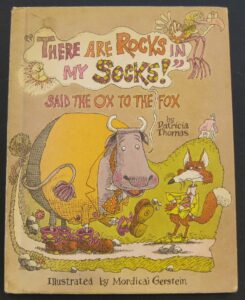
Have you ever read There are Rocks in My Socks! by Patricia Thomas and Mordicai Gerstein?
What about Fox in Socks by Dr. Seuss?
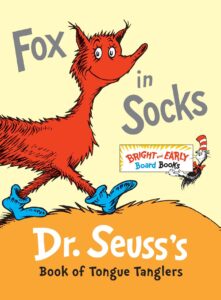
I simply can’t get enough of these two books. They are irresistible when picking out bed time stories. They are re-readable in the best sense of the word. They don’t get old like many stories do and they have left a lasting impression.
Why do I say all this? Why focus on these classics and their positive lasting impressions?
Why Lasting Impressions Matter
Simply put, if your content, book, story, article, blog, vlog, etc. doesn’t leave a lasting impression, it’s not going to be successful. It would be far better to write a story that leaves an incredible lasting impression that it would be to create lots of stories that are easily forgotten.
No one tells their friend about that story they forgot. No one recommends mediocre content when their reputation is on the line.
But everyone, seriously everyone, happily shares and recommends content that strikes a chord. Literature that hits the heart. Knowledge that challenges the mind. Conviction that stirs the soul. Children’s books that bring laughter to bedtime.
How are you doing with writing books that leave lasting impressions? You’re not alone if you feel like improvement is needed. We all struggle with our own biases to accept or promote our work even if deep down inside we think maybe, just maybe, it could be better. It could be slicker. It could be more powerful. Maybe these 10 Simple Ways to Become a Better Writer by Alexandra Franzen are exactly what you need? Take special note of Alexandra’s #10…Be a Daymaker!
Creating Content Worth Remembering
Recognizing the need to create content that grabs a reader or watcher and doesn’t let them go is critical to long-term success. I don’t want you to jump on my site, or pick up one of my books, read a little or a lot, and then forget all about it. It’s not worth it.
What’s truly worth it, what brings real value, is connection. Connecting on the emotional level where the words on the page become something more. Something nearly intangible. Something else entirely. A memory. An experience. A part of us.
We can do this. We can take that one draft, sitting in the dusty corner of our lives, and we can pour ourselves into it. We can give it life. We can mold it and make it such an unstoppable force, that someone, maybe lots of someone’s, will be struck by it.
I love how Matt Ragland pieces powerful stories together in his post, 5 Elements of Powerful Stories. There is a method to creating powerful content. We don’t need to invent it and we don’t need to copy someone else’s methods. Matt explains in his post five components that result in great content.
Holding Ourselves Accountable to Create Better Work
The only way we can create these lasting impressions is if we hold ourselves accountable to creating quality content.
Giving our writing the time it requires to be sticky.
Sticky in the mind and heart of a reader. A consumer.
Give them an experience worth far more than what they’ve paid.
Change them in such a way that they’ll appreciate how they traded their time, for your story.
Final Thoughts
The stories that stay with us rarely do so because they were technically perfect.
They stay with us because they made us feel something.
They made us laugh, think, question, hope, learn, or see the world differently.
Whether you’re writing books, articles, speeches, videos, or any other form of content, your goal shouldn’t simply be to publish something. The goal should be to create something meaningful enough that people remember it.
Memorable stories create connection.
They become conversations people share with friends. They become books children ask to hear again. They become ideas that influence decisions years later.
The most valuable content isn’t always the content that receives the most immediate attention.
It’s the content that continues to matter long after someone encounters it.
If you want your work to make an impact, focus less on producing more content and more on creating content worth remembering.

Sara Jane Kehler
May 25, 2020I agree, Rhys.
In fact, my entire blog is focused on helping others by sharing personal stories. Stories are relatable. Stories heal. Stories teach. Stories inspire!
Rhys Keller
May 25, 2020Thank you for sharing that, Sara! Sharing personal stories and experiences is such a vital component to creating the sort of human connection writers and readers are starving for. It’s hard to be raw. Tough to be honest. But if we settle for anything less, we won’t be effective. We won’t create content that resonates. We all know the real deal when we see it. We know when someone has poured their heart out. We know when a writer has given it their all. And we know when we’ve been cheated. When we’ve been offered less than what we were sold. Well done and thank you for being real and caring more about helping and encouraging people by opening up yourself and with others.
Sara Jane Kehler
May 25, 2020You’re right. As a reader, I instinctively recognize when there is no soul/heart behind the writing.
I read once that a writer’s gift is vulnerability. It was an “aha!” moment for me. Until then, I thought my willingness to bare my heart was a weakness and I despised the pain that accompanied it. But vulnerability as a gift? That I can understand. Then, the inevitable pain is worth it to me. If that makes any sense. 🙂
Rhys Keller
May 26, 2020Powerful! Yes, vulnerability is the writer’s gift! Who’s going to be bold enough to be vulnerable!? What a way to stand out from the crowd. Thank you for sharing that!