If you’re trying to figure out the correct Last Kids on Earth books in order, you’re not alone. The series combines illustrated middle-grade novels with graphic novels, companion books, and other activities, which can make it surprisingly difficult to know where to start or what belongs in the main series.
Whether you’re buying The Last Kids on Earth for the first time, trying to figure out what comes after Book 5, or wondering whether the graphic novels fit into the reading order, this guide brings everything together in one place.
You’ll find the complete main-series reading order, information about companion books and graphic novels, age and reading-level guidance, answers to common parent questions, and our family’s experience with the series.
When you buy through my links, I may earn money from my affiliate partners. Learn more.
The Last Kids on Earth follows thirteen-year-old Jack Sullivan and his friends as they try to survive a monster apocalypse filled with zombies, strange creatures, enormous battles, and plenty of humor. The series is designed to feel part novel, part comic book, and part video game, making it especially appealing to readers who enjoy fast-paced adventures with lots of illustrations.
If you’re short on time, start with the Quick Facts and Reading Order sections below. The rest of the guide goes deeper into the questions readers and families are most likely to have.
Quick Facts
| Author | Max Brallier |
| Illustrator | Douglas Holgate |
| First book | The Last Kids on Earth |
| Main series | 10 books with minor black and white illustrations |
| Complete core story | 12 books (includes Book 5.5 June’s Wild Flight and Book 7.5 Quint and Dirk’s Hero Quest) |
| Recommended age | Approximately 8–12 |
| Typical grades | Grades 3–7 |
| Reading level | Book 1 is Lexile 650L and Fountas & Pinnell T |
| Best starting point | Book 1, The Last Kids on Earth |
| Genre | Middle-grade adventure, humor, monsters, zombies, and survival |
| Graphic novels | Yes |
| Companion books | Yes |
| Netflix adaptation | Yes |
| Main characters | Jack, June, Quint, Dirk, and Rover |
The publisher currently lists the first book for ages 8–12 and grades 3–7, with a Lexile measure of 650L. TeachingBooks also lists Book 1 at Lexile 650L and identifies the series with adventure, humor, horror, and graphic-novel elements.
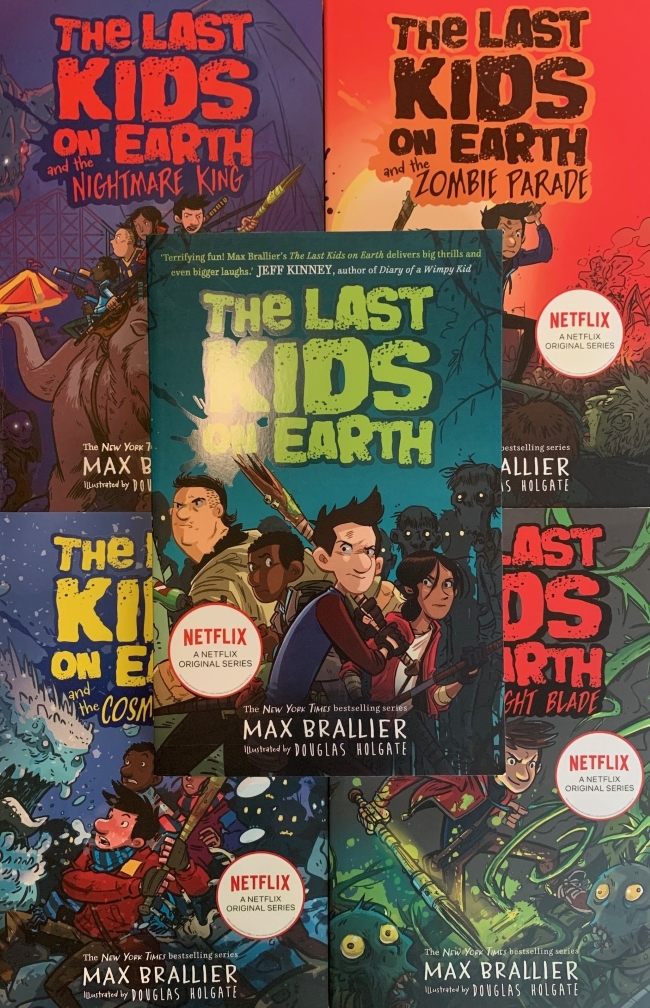
The Last Kids on Earth Books in Order
The best place to start is Book 1 and then continue through the main series in publication order.
Individual books are summarized and linked below for your convenience.
You can purchase these together and typically cheaper in The Last Kids on Earth 10-Books Collection Set or more complete The Last Kids on Earth 12-Books Collection Set.
1. The Last Kids on Earth
Jack Sullivan is an ordinary thirteen-year-old who suddenly finds himself living through a monster apocalypse. Instead of simply hiding from the chaos, Jack turns survival into an enormous adventure. He builds a fortified tree house, gathers supplies, drives around in his monster-fighting vehicle, and starts looking for other survivors.
The first book introduces the central group of characters, including Jack, Quint, Dirk, June, and Rover. It also establishes the combination of humor, action, illustrations, and video-game-style storytelling that defines the series.
2. The Last Kids on Earth and the Zombie Parade
Jack and his friends continue trying to survive the apocalypse while facing new problems and new threats. The world they thought they understood continues to become more complicated, and the group has to work together to deal with what comes next.
3. The Last Kids on Earth and the Nightmare King
The third main-series adventure raises the stakes as Jack and his friends discover that the apocalypse is more complicated than they originally believed. The group continues to develop while facing new dangers and trying to understand the forces behind the monster invasion.
4. The Last Kids on Earth and the Cosmic Beyond
The series expands beyond the immediate problems of surviving in Wakefield as Jack and his friends encounter increasingly strange threats and a much larger world.
5. The Last Kids on Earth and the Midnight Blade
The fifth main novel continues the larger story while introducing another major challenge for the group. By this point, the characters, relationships, and ongoing storyline have become increasingly important, which is another reason I recommend reading the main series in order.
6. The Last Kids on Earth and the Skeleton Road
Jack and his friends continue their journey through an increasingly dangerous world. The adventure format remains intact, but the larger story continues building from the events of the earlier books.
7. The Last Kids on Earth and the Doomsday Race
The seventh main-series book continues the increasingly expansive adventure and introduces another major challenge for Jack and the group.
8. The Last Kids on Earth and the Forbidden Fortress
The eighth main novel continues the story of Jack, June, Quint, Dirk, and Rover as the group faces another major threat in the monster-filled world.
9. The Last Kids on Earth: Monster Dimension
The ninth main-series book continues the larger storyline and pushes the characters into another major stage of their adventure.
10. The Last Kids on Earth and the Destructor’s Lair
The Destructor’s Lair is Book 10 in the main series and continues the ongoing Last Kids on Earth story. It is the most recent main-series novel currently listed by the official franchise site.
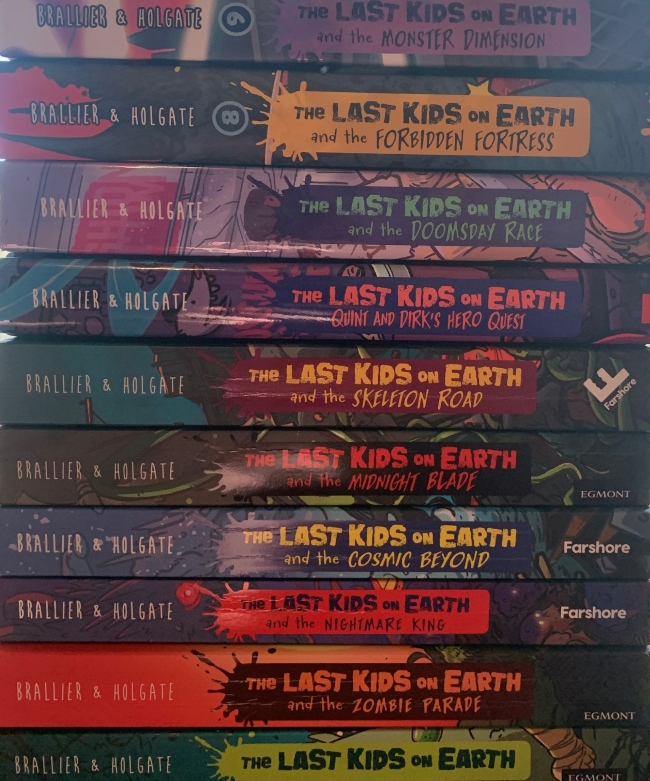
The Complete Last Kids on Earth Reading Order, Including Books 5.5 and 7.5
If you want to read more than just the ten numbered main novels, there are two additional books that fit directly into the story: June’s Wild Flight (Book 5.5) and Quint and Dirk’s Hero Quest (Book 7.5).
The official publisher series site identifies both as numbered books within the larger series. June’s Wild Flight takes place between The Midnight Blade and The Skeleton Road, while Quint and Dirk’s Hero Quest takes place after The Doomsday Race and before The Forbidden Fortress, even though these two books were published at a later date.
For readers who want the most complete story experience, I would read them in this order:
- The Last Kids on Earth
- The Last Kids on Earth and the Zombie Parade
- The Last Kids on Earth and the Nightmare King
- The Last Kids on Earth and the Cosmic Beyond
- The Last Kids on Earth and the Midnight Blade
- The Last Kids on Earth: June’s Wild Flight (Book 5.5)
- The Last Kids on Earth and the Skeleton Road
- The Last Kids on Earth: Quint and Dirk’s Hero Quest (Book 7.5)
- The Last Kids on Earth and the Doomsday Race
- The Last Kids on Earth and the Forbidden Fortress
- The Last Kids on Earth: Monster Dimension
- The Last Kids on Earth and the Destructor’s Lair
For a first-time reader, I recommend reading the main novels in this order rather than jumping around.
You don’t have to read the two companion novels (Book 5.5 and 7.5) to understand the main ten-book sequence, but they add important character perspectives and story details. Both are considered essential stories within the larger series.
There are also additional books and graphic novels connected to the franchise detailed below. Those can be explored after understanding the main series.
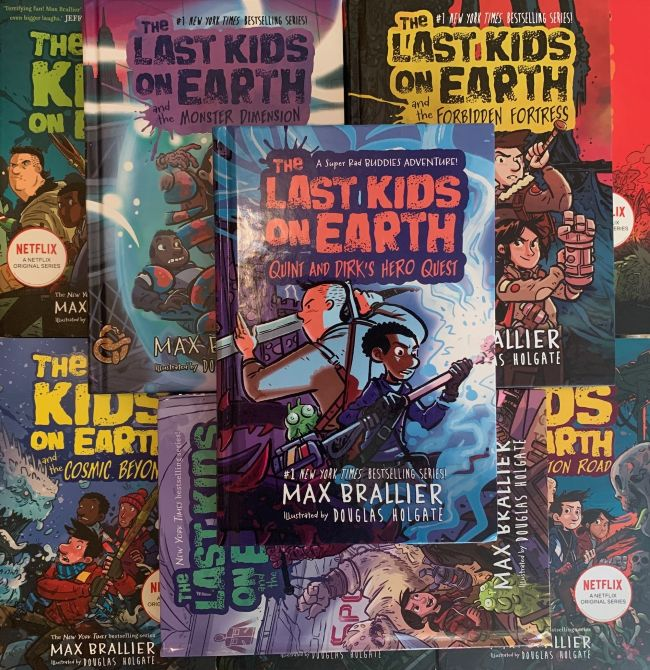
Do You Need to Read The Last Kids on Earth Books in Order?
You don’t have to read every Last Kids on Earth book in order to understand what is happening in an individual adventure. Each book contains its own action, humor, and immediate storyline.
However, I strongly recommend reading the main series in order.
The characters develop from book to book, relationships change, and the world becomes larger and more complicated as the series progresses. Starting with The Last Kids on Earth also introduces the core group and explains how the monster apocalypse works.
This is one of those series where reading in order makes the overall experience better even if a reader could technically understand a later book on its own.
If you’re buying the books for a child who is just discovering the series, start with Book 1.
How Many Last Kids on Earth Books Are There?
There are currently 10 main Last Kids on Earth novels.
But if you want to read the complete core story, including Books 5.5 and 7.5, there are 12 books.
This distinction matters because different websites sometimes give different totals depending on what they count.
If you’re curious how many Last Kids on Earth books and related publications exist altogether, the number is far higher.
The franchise includes additional books and activities outside the main numbered novels. These include graphic novels, companion books, and interactive material based on the Last Kids on Earth world. The official franchise site currently features the main books alongside companion and activity titles which are described below.
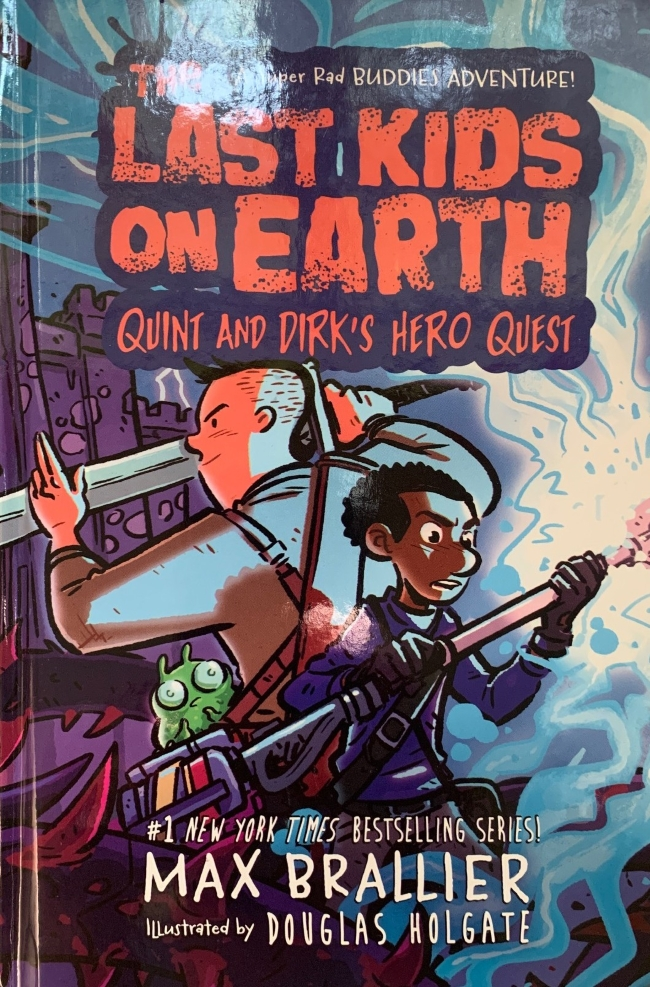
The Last Kids on Earth Graphic Novels
The Last Kids on Earth franchise also has a separate graphic-novel line.
These books adapt the Last Kids on Earth stories into full-color graphic-novel form. Penguin Random House maintains a separate series listing for the graphic novels, including The Last Kids on Earth: Graphic Novel, The Zombie Parade, and the Nightmare King.
For readers who enjoy visual storytelling, the graphic novels can be an excellent way to experience the series.
They are especially appealing to children who enjoy books such as Diary of a Wimpy Kid, graphic novels, comics, or heavily illustrated chapter books.
I would not treat the graphic novels as a replacement for the main reading order if your goal is to experience the complete prose series. Instead, think of them as another way to experience the Last Kids on Earth story.
If your child strongly prefers graphic novels, however, they can be an excellent entry point into the world and may encourage a reluctant reader to explore the longer novels.
Other Last Kids on Earth Books and Companion Titles
The main novels aren’t the only way to spend time in the Last Kids on Earth universe.
The franchise includes companion material such as The Last Kids on Earth Survival Guide, which is designed as an interactive journal with activities based on the characters and world. Readers can create inventions, design their own hangouts, and imagine themselves as part of the post-apocalyptic setting.
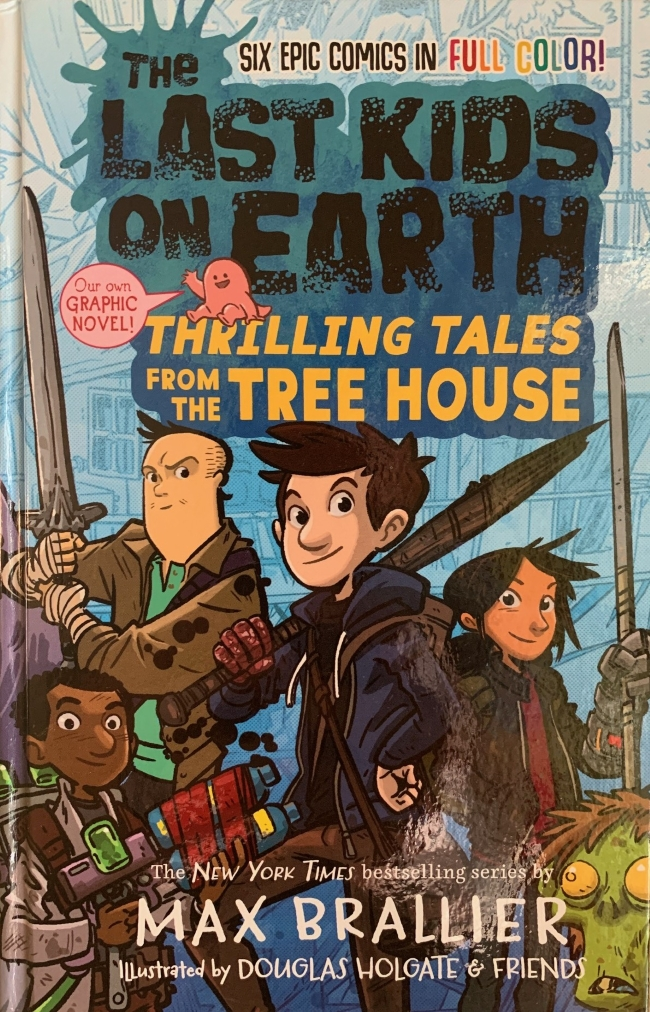
There are also other companion and activity publications connected to the series, including June’s Wild Flight, Thrilling Tales from the Tree House, Quint and Dirk’s Hero Quest, The Last Kids on Earth Mad Libs and additional illustrated and graphic material.
There are also four books within the sub-series The Last Comics on Earth, which were published between 2023 and 2026.
None of these books are necessary to understand the main story.
If you’re trying to read the main numbered series, stick with the ten main novels. If you want the most complete core story, follow the 12-book reading order above.
If your child becomes a serious fan, the companion material can extend the experience beyond the main books.
What Age Are The Last Kids on Earth Books For?
The Last Kids on Earth is generally a strong fit for children around 8–12 years old.
The publisher currently lists the first book for ages 8–12 and grades 3–7. The first book has a Lexile measure of 650L and a Fountas & Pinnell level of T.
Common Sense Media recommends the series for ages 8 and up. TeachingBooks places Book 1 within grades 3–8 and identifies it as adventure, graphic novel, horror, and humor.
As always, reading ability and content sensitivity vary considerably from child to child.
A strong third grader may be able to read the books independently, while a younger reader might enjoy them more as a read-aloud or with some help.
The bigger question is often not whether a child can physically read the words. It is whether the child enjoys the combination of monsters, zombies, action, humor, and increasingly complicated adventures.
What Grade Level Are The Last Kids on Earth Books?
The publisher lists the first book for Grades 3–7. Its Lexile measure is 650L and its Fountas & Pinnell level is T.
TeachingBooks lists Book 1 at a Lexile level of 650L and an ATOS reading level of 4.1.
These numbers are useful, but they shouldn’t be treated as a perfect measure of whether a particular child will enjoy the series.
The books combine relatively accessible prose with illustrations, humor, action, and a lot of dialogue. That combination can make the series particularly attractive to children who are capable readers but aren’t naturally drawn to long blocks of text.
Are The Last Kids on Earth Books Scary?
They can be, but the tone is much more humorous and adventurous than genuinely frightening.
The premise sounds darker than the actual reading experience. The world has been devastated by a monster apocalypse, and the characters regularly encounter zombies, monsters, destruction, and dangerous situations.
At the same time, the series treats much of this material with humor. The publisher describes the books as a mixture of text and black-and-white illustration and emphasizes their comic-book and video-game feel. Common Sense Media describes the violence as cartoonish and humorous and gives the series an age recommendation of 8+.
That makes a difference.
This isn’t realistic horror.
The characters aren’t spending every chapter terrified of death.
Instead, the books turn the apocalypse into a huge adventure filled with monsters, jokes, inventions, battles, and friendships.
That said, some children are more sensitive to zombies and monster imagery than others. A child who is easily frightened by undead creatures or apocalyptic stories may want to start with the first book rather than receiving the entire series at once.
Is The Last Kids on Earth Appropriate for Kids?
For many children, yes.
The publisher recommends the series for ages 8–12, and Common Sense Media recommends it for ages 8 and up.
The biggest consideration isn’t language or mature subject matter. It is the level of monster violence and the basic premise of a world overrun by zombies and other creatures.
The violence is exaggerated and cartoonish rather than realistic. The story also places considerable emphasis on friendship, courage, teamwork, vulnerability, and problem-solving. Common Sense Media specifically notes the series’ combination of humor, character development, and heart.
For a child who already enjoys monsters, zombies, action, or video-game-style adventures, the premise is likely to feel exciting rather than disturbing.
For a particularly sensitive reader, I would preview the first book before deciding whether to continue.
What Is The Last Kids on Earth About?
The Last Kids on Earth begins after a monster apocalypse transforms Jack Sullivan’s ordinary life.
Jack is thirteen and suddenly finds himself living alone in a fortified tree house. He has supplies, video games, a vehicle, and plenty of time to imagine himself as the hero of his own apocalypse adventure.
But surviving alone doesn’t last.
Jack eventually builds a team with his friend Quint, former bully Dirk, the fiercely capable June, and his unusual monster companion Rover.
Together, they face zombies, monsters, strange creatures, and increasingly dangerous threats while trying to understand what happened to their world.
The official series description emphasizes the combination of monsters, humor, adventure, and video-game-style storytelling.
At its heart, however, the series is about more than fighting monsters.
It is about friendship, courage, belonging, and learning that surviving alone isn’t nearly as valuable as having people you care about beside you.
Who Will Enjoy The Last Kids on Earth?
The series is particularly well suited for readers who enjoy:
- Zombies and monsters
- Fast-paced adventures
- Humor mixed with action
- Graphic novels and heavily illustrated books
- Video games
- Superheroes
- Survival stories
- Kids who get to be the heroes
- Stories about friendship and teamwork
- Books with frequent action and relatively short sections
It can also be a strong choice for reluctant readers.
The publisher specifically describes the first book as a mixture of text and black-and-white illustration and notes its appeal to children who dream of starring in their own comic book or video game.
That combination gives the books a different feel from a traditional middle-grade novel.
Why Kids Love The Last Kids on Earth
The most obvious reason is simple.
It’s fun.
The Last Kids on Earth takes a premise that could be genuinely frightening and turns it into an enormous playground for adventure.
Kids get tree houses, monster-fighting vehicles, weapons, inventions, quests, video-game-style accomplishments, strange creatures, and a group of characters who are allowed to solve problems themselves.
The books also move quickly.
There is very little sense that the reader has to wait around for the story to become interesting. Jack and his friends are almost immediately dealing with a world that has completely changed.
The illustrations reinforce that pace and make the books feel closer to a novel and comic-book hybrid than a traditional chapter book.
The result is a series that can be especially effective for children who love stories but don’t naturally gravitate toward dense novels.
Also, and this might be an even bigger reason kids love these books, the kids are the heroes.
Adults don’t swoop in to save the day or show up to explain right and wrong behavior.
Kids simply figure out how to survive, thrive, and save the world.
Why Parents May Like The Last Kids on Earth
The Last Kids on Earth is certainly not a quiet, gentle reading experience.
It is loud, ridiculous, action-packed, and filled with monsters.
But underneath all of that, the series contains some worthwhile themes.
The characters learn to work together.
They develop friendships.
They discover that bravery doesn’t mean never being afraid.
They learn to trust one another.
They also have to deal with differences in personality and ability. Jack, Quint, Dirk, and June don’t approach problems in exactly the same way, and the group becomes stronger because of those differences.
That combination of humor and character development is one reason the series has remained popular beyond its initial monster-apocalypse premise. Common Sense Media specifically highlights bravery, vulnerability, friendship, humor, and character development in its review.
For parents, I think that is worth remembering.
The zombies may be what gets a child to pick up the book.
The friendships are part of what makes the series worth reading.
And let’s not forget, a book that helps keep parents awake during those late night reading times is a big win.
The Last Kids on Earth vs. Graphic Novels
If your child is deciding between the regular books and the graphic novels, there isn’t necessarily one correct choice, but I do have a preference.
The main Last Kids on Earth books combine traditional prose with illustrations. The separate graphic novels take the stories further into full-color visual storytelling. Penguin Random House currently lists the graphic novels as their own series.
For strong independent readers, I would start with the regular novels.
For me, books with more words are usually preferable because I want a good story to pull a child deeper into reading. Graphic novels can absolutely be valuable, but when a child enjoys a traditional illustrated novel, I love seeing that combination of storytelling and sustained reading.
For readers who are more visually oriented or reluctant to tackle a traditional chapter book, the graphic novels may be an easier entry point.
There is also no reason a child can’t enjoy both.
A child might read the regular novel and then revisit the story through the graphic-novel adaptation. This is ideal for me.
Enjoy the word-heavy books first, then enjoy the awesome graphic storyline.
However, the important thing is that the format encourages the child to keep reading. A book in their hand is always better than no book at all!
The Last Kids on Earth and Reluctant Readers
This may be one of the strongest reasons to consider the series.
Some children don’t dislike reading.
They dislike the kinds of books adults keep handing them.
A child who loves video games, monsters, superheroes, comics, and action may have little interest in a quiet story about everyday school life.
The Last Kids on Earth offers almost the opposite experience.
The books move quickly, contain frequent illustrations, use humor heavily, and give the reader an immediate fantasy of becoming a hero in a world where normal rules no longer apply.
The publisher describes the first book as particularly suited to children who dream of starring in their own comic book or video game.
For some readers, that can be the difference between reluctantly completing a reading assignment and genuinely wanting to know what happens next.
If Minecraft is what gets your child excited about reading, another series worth considering is Diary of an 8-Bit Warrior. It combines the familiar world of Minecraft-inspired adventure with an ongoing story, making it a particularly natural choice for kids who love video games but are still developing a love of books.
The Last Kids on Earth is actually one book series we’ve kept for a long time because we think our younger children may like it as much as our oldest and don’t want to part with it too soon.
The Last Kids on Earth Netflix Series
The Last Kids on Earth has also been adapted into a Netflix animated series.
The show gives families another way to experience the characters and world, although the books remain the original reading experience.
I would recommend reading the books before watching the animated series when possible.
That allows children to imagine Jack, June, Quint, Dirk, and Rover for themselves before seeing another version of the characters.
It can also be fun to compare the two after finishing a book.
Personally, I thought the show had more frightening scenes than the books because of the quick scare and jump factor the series employed. With the books, reading pace helps mellow out the intense action scenes.
I recommend watching some of the show with your child so you know if it’s appropriate for your family.
The books and Netflix series are related, but they aren’t interchangeable experiences.
What Comes After The Last Kids on Earth?
Once a reader finishes the main Last Kids on Earth series, there are several directions to go.
Readers who love monsters and action may enjoy continuing with the franchise’s graphic novels and companion books.
Readers who love the video-game feel of the series may also enjoy Diary of an 8-Bit Warrior, especially if Minecraft is already one of their favorite games.
Readers who love dragons and fantasy could move toward Wings of Fire.
Readers who enjoy expansive animal adventures could try Warrior Cats.
Readers who are ready for another illustrated fantasy adventure could explore Dragon Masters.
And readers who are younger or still developing their independent reading skills may enjoy Magic Tree House.
The best next series depends on what the reader liked most about The Last Kids on Earth.
For readers who enjoy the adventure and animal-centered storytelling but want something a little different, The Wild Robot is another excellent series to explore.
If it was the monsters and action, choose another action-heavy fantasy series.
If it was the friendships, choose a series with a strong recurring cast.
If it was the illustrations and accessible format, look for another illustrated middle-grade series.
Frequently Asked Questions
What is the first Last Kids on Earth book?
The first book is The Last Kids on Earth, written by Max Brallier and illustrated by Douglas Holgate. It introduces Jack Sullivan and the core characters who become the central group throughout the series.
How many Last Kids on Earth books are there?
If you’re asking how many numbered main-series books there are, the answer is 10. If you want to read the complete core story, including Books 5.5 and 7.5, there are 12 books. There are many additional and companion books in The Last Kids on Earth universe detailed in this guide above.
Do you have to read The Last Kids on Earth books in order?
You don’t absolutely have to, but reading the main novels in order is strongly recommended. The characters and larger story develop from book to book.
What age is The Last Kids on Earth for?
The publisher lists the series for ages 8–12, and Common Sense Media recommends it for ages 8 and up.
What grade level are The Last Kids on Earth books?
The publisher lists the first book for Grades 3–7. Book 1 has a Lexile measure of 650L and a Fountas & Pinnell level of T.
Are The Last Kids on Earth books scary?
They contain zombies, monsters, danger, battles, and an apocalyptic setting, but the violence and frightening elements are generally presented in a humorous and cartoonish way. Common Sense Media describes the violence as cartoonish and recommends the series for ages 8 and up.
Are The Last Kids on Earth graphic novels the same as the books?
The graphic novels adapt Last Kids on Earth stories into a full-color graphic-novel format. They are part of a separate graphic-novel line rather than simply being another format of every main-series novel.
What is The Last Comics on Earth?
The Last Comics on Earth is a separate full-color graphic-novel series set in the Last Kids on Earth universe. It isn’t simply another edition of the ten main novels.
The series follows Jack, Quint, June, and Dirk as they create their own comic book after discovering that no new issues of their favorite comic, Z-Man, are coming.
If you’re trying to read the main Last Kids on Earth story, you don’t need to read The Last Comics on Earth. Think of it as an additional graphic-novel adventure for readers who already enjoy the characters and world.
Who wrote The Last Kids on Earth?
The series was created and written by Max Brallier. Douglas Holgate illustrated the original main-series books.
Is The Last Kids on Earth good for reluctant readers?
It can be an excellent choice for reluctant readers who enjoy action, humor, monsters, video games, comics, and heavily illustrated books. The combination of illustrations, fast pacing, humor, and adventure gives the series a very accessible feel.
What should kids read after The Last Kids on Earth?
If your child loves action and monsters, try another adventure-focused series. Wings of Fire, Warrior Cats, and Dragon Masters are natural possibilities for readers ready for more fantasy and longer-running stories. If you felt The Last Kids on Earth was a bit advanced for your child and you’d like to try something a little slower and more historical, consider Magic Tree House.
Final Thoughts
The Last Kids on Earth succeeds because it understands what makes reading fun for a lot of children.
It doesn’t ask readers to choose between a good story and a visually exciting one.
It gives them both.
The series combines monsters, zombies, humor, illustrations, friendship, and nonstop adventure into a format that feels remarkably close to the way many children already enjoy entertainment through comics and video games.
That makes it particularly valuable for families trying to find books that children genuinely want to read.
If your child loves monsters, action, humor, and stories where kids get to become the heroes, The Last Kids on Earth is an easy series to consider.
Start with The Last Kids on Earth, continue through the main novels in order, and then explore the graphic novels and companion material if the series becomes a favorite.
And if your reader eventually outgrows the Last Kids on Earth world and wants something with deeper fantasy and longer story arcs, Wings of Fire is a natural next step. For readers who want an even larger animal-centered universe, Warrior Cats offers an enormous amount of material to explore.
